

BY STAFF REPORTER
Zimbabwe’s public transport sector is facing renewed pressure as workers at the Zimbabwe United Passenger Company (ZUPCO) reportedly resort to extraordinary measures to survive after going more than two years without receiving their salaries.
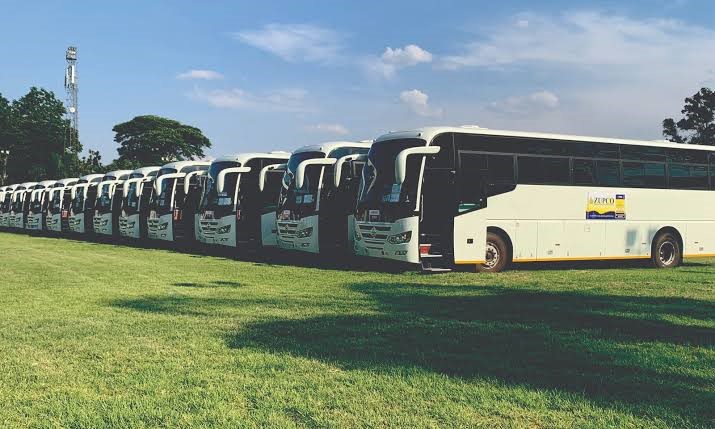
Reports indicate that some ZUPCO drivers have taken control of buses assigned to them, sleeping in the vehicles and operating them independently to generate income for their personal survival. The drivers reportedly cover fuel and other running costs themselves while using the buses to earn a livelihood.
The development highlights the severity of the financial crisis facing the state-linked transport company and raises fresh questions about the welfare of employees and the sustainability of public transport operations.
ZUPCO’s workforce has reportedly fallen from about 7,000 employees to approximately 1,500. The sharp decline has been attributed to prolonged salary arrears, departures by workers and legal disputes involving former employees seeking payment of outstanding wages and other benefits.
Thousands of former workers are reportedly pursuing legal remedies, with some securing court judgments that have resulted in attempts to attach company assets in order to recover unpaid dues.
The loss of personnel has compounded operational difficulties at a company that remains an important component of Zimbabwe’s public transport system.
For drivers who remain attached to the company, the reported decision to operate buses independently represents an increasingly desperate response to prolonged financial hardship.
Going without a salary for more than 24 months leaves workers with few options to meet basic household expenses. The reported practice of sleeping in buses and generating personal income from their operation illustrates the extent to which the employment relationship has broken down.
However, the arrangement also raises questions about ownership, accountability, insurance, vehicle maintenance and passenger safety.
If company buses are being operated outside normal ZUPCO management structures, there could also be uncertainty over who is responsible for revenue collection, fuel, repairs, accidents and regulatory compliance.
The ZUPCO dispute comes against the backdrop of broader changes in Zimbabwe’s labour market and public sector.
The government has been seeking to reduce the size of the state workforce while simultaneously responding to concerns over wages, the cost of living and employment security.
Minimum-wage adjustments have also remained an important issue for workers and employers as households struggle with rising living costs.
At the same time, the government has pushed back against the use of casual employment arrangements, arguing for greater employment security and compliance with labour regulations.
The contrast is particularly significant in the ZUPCO case: while policy discussions emphasise decent and secure employment, workers at a state-linked transport operator are reportedly facing years of unpaid wages.
The crisis places renewed responsibility on the government to clarify ZUPCO’s financial position and the status of its employees.
Authorities will need to address how salary arrears accumulated for such an extended period, what plans exist to compensate current and former workers, and how the company intends to restore reliable public transport services.
There are also questions surrounding the condition and availability of ZUPCO’s bus fleet. Reports have raised concerns about the number of operational vehicles and the maintenance of buses, although some of the claims circulating publicly have yet to be independently verified.
For commuters, the consequences of prolonged institutional failure could be significant. ZUPCO has historically played a role in providing relatively affordable transport, particularly for lower-income Zimbabweans.
The reported actions of unpaid drivers should therefore be viewed within the broader context of a company struggling with employee arrears, workforce losses, legal claims and operational challenges.
The immediate priority is to restore a functioning employment relationship and ensure that workers are paid what they are owed. At the same time, authorities must establish clear mechanisms for managing ZUPCO’s assets and operations while protecting passengers.
Unless the underlying financial and labour problems are addressed, the dispute risks becoming more than a wage crisis. It could evolve into a wider public transport and governance crisis, with workers, commuters and the state all bearing the consequences.
According to media reports, the drivers held on to the buses and fear that once the buses are surrendered to the depots for repairs, they may take many months to return because the company has no money for repairs, or they may never be released at all. There are also fears that the buses could be stripped of parts while parked at the depots.
Of the 500 buses procured by the company between 2019 and 2022, only 150 are still functional. Almost all of those are reportedly not roadworthy, putting the lives of passengers in grave danger. In violation of the country’s laws, only 10 of the buses are registered and have number plates.
Media efforts to get comment from management were unsuccessful. ZUPCO Operations Director and Acting Chief Executive Linda Samundere and Board Chairman Jamster Chimiga referred questions to the company’s public relations department, which could not be reached for comment by the time of going to print.
Workers’ Committee Chairman Jameson Matapo also declined to comment, saying he was not authorised to discuss company issues with the media.
“The law does not allow me to discuss company issues and besides I do not know you,” said Matapo.





Leave a comment