

BY OWN CORRESPONDENT
Labour federation calls for urgent dialogue, law compliance and improved working conditions following engagement with Chinese Ambassador
The Zimbabwe Congress of Trade Unions (ZCTU) has raised concerns over labour practices in some Chinese-owned companies operating in Zimbabwe, citing challenges relating to workers' rights, working conditions, occupational safety, communication and labour relations.
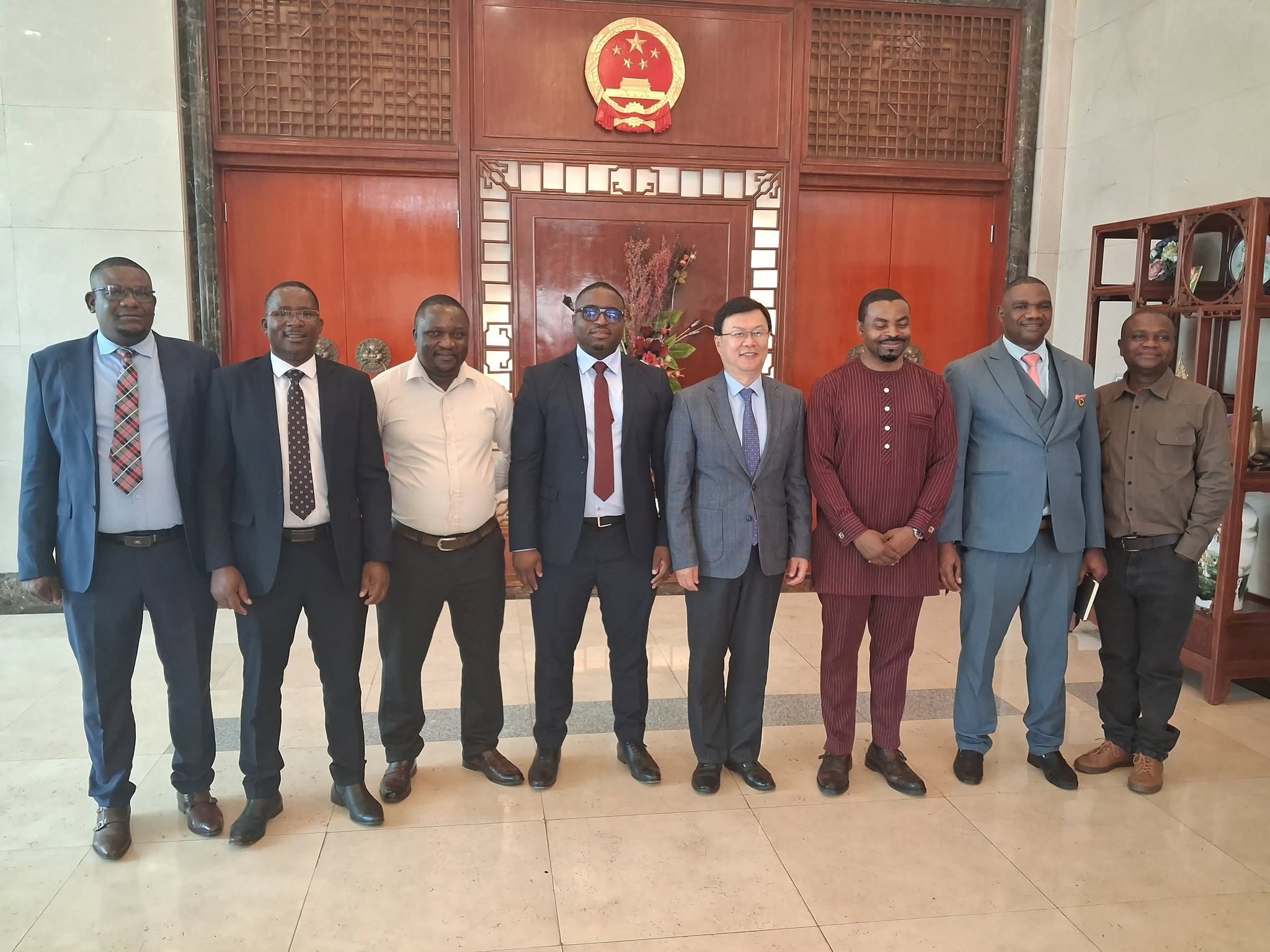
The concerns were raised during a meeting between the ZCTU elected leadership and Chinese Ambassador to Zimbabwe, His Excellency Zhou Ding, in an engagement aimed at strengthening cooperation and addressing labour-related challenges affecting workers employed by Chinese investors.
The delegation was led by ZCTU President Valentine Chikosi, who emphasised the need for constructive engagement between the labour movement, the Chinese Embassy and the Chinese business community to address workplace concerns and promote respect for Zimbabwean labour laws.
The meeting identified cultural and workplace differences as some of the factors contributing to misunderstandings between Chinese management and Zimbabwean workers. However, the ZCTU stressed that cultural differences should not be used to justify poor labour practices or undermine workers' fundamental rights.
Workers in some Chinese-owned enterprises have raised concerns over management styles, communication barriers, working hours, occupational safety and health, workers' welfare, grievance handling and the treatment of employees who seek to raise workplace grievances.
The labour federation said these challenges require urgent attention, particularly as Chinese investment continues to expand across various sectors of Zimbabwe's economy.
The ZCTU maintained that foreign investment must not come at the expense of workers' rights, dignity and welfare, insisting that all investors operating in Zimbabwe must abide by the country's labour laws, collective bargaining agreements and workplace safety standards.
The federation called for deliberate interventions to bridge the gap between employers and workers, proposing joint workshops involving Chinese investors, managers, trade unions and workers to promote mutual understanding and improve industrial relations.
It also called for capacity-building programmes on Zimbabwe's Labour Act, National Employment Council agreements, collective bargaining, occupational safety and health, grievance procedures and workers' rights, arguing that both employers and employees must understand their obligations and entitlements.
The ZCTU further proposed the establishment of a structured and regular dialogue platform involving the labour federation, Chinese Embassy, Chinese business community and relevant stakeholders to address labour disputes and workplace concerns before they escalate into industrial conflict.
The federation believes that sustained engagement can help address communication and cultural barriers while ensuring that workers are treated fairly and that employers operate within Zimbabwe's legal framework.
The meeting also highlighted the importance of cultural exchange and mutual respect, with the ZCTU arguing that harmonious industrial relations can only be achieved where workers are afforded dignity, fair treatment, safe working conditions and the opportunity to organise and collectively bargain.
The ZCTU welcomed the engagement with Ambassador Zhou Ding and his delegation, describing it as an important step towards strengthening dialogue and cooperation on labour issues.
However, the labour federation stressed that dialogue must translate into tangible improvements in the conditions of workers in Chinese-owned enterprises, adding that investment should be measured not only by capital inflows and business expansion but also by its contribution to decent jobs, workers' welfare and sustainable development.
The ZCTU reaffirmed its commitment to defending workers' rights while promoting constructive engagement with investors, maintaining that Zimbabwe's economic development must be anchored on decent work, respect for labour rights and social justice.




Leave a comment