

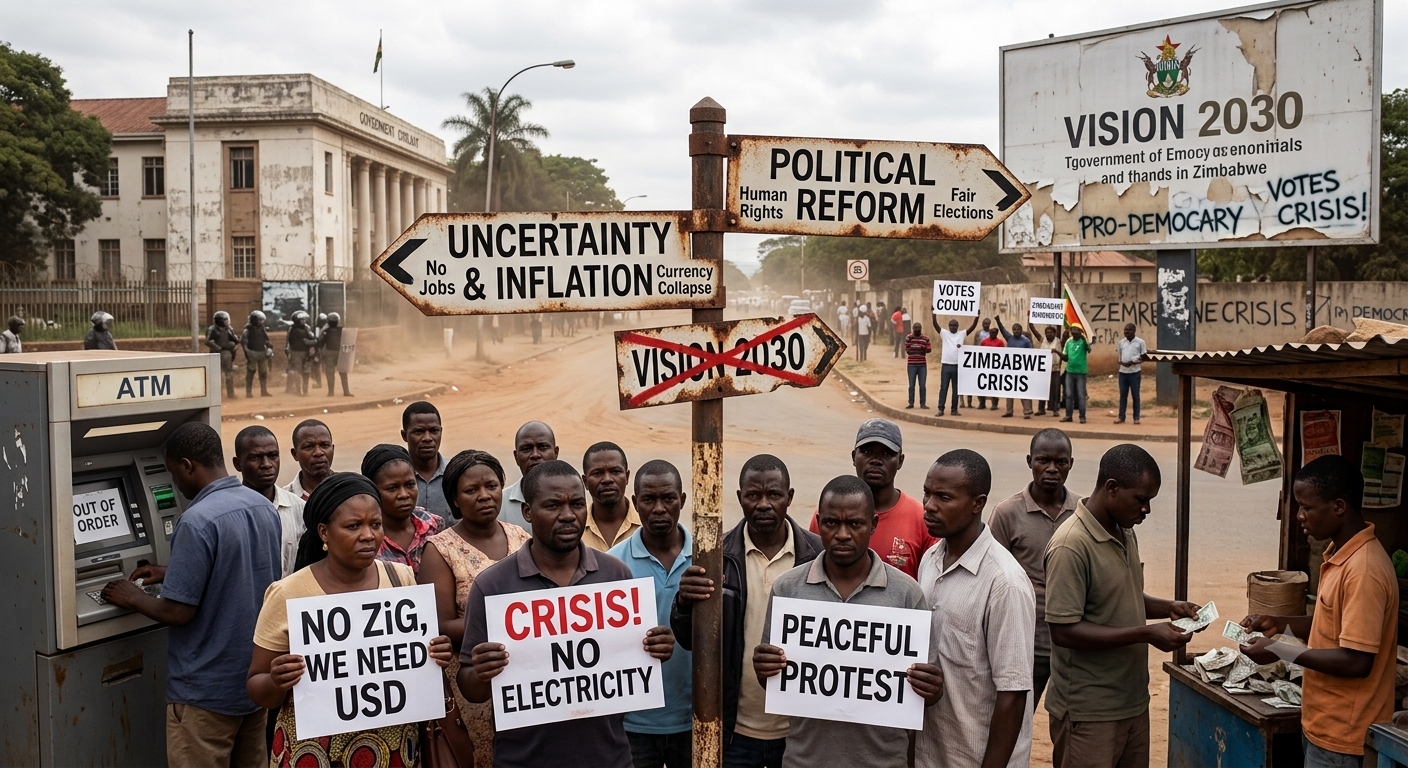
Zimbabwe is at a pivotal moment in its history. The country faces ongoing economic instability, mounting debt, and the increasing impacts of climate change. These challenges are compelling Zimbabwe to fundamentally rethink its economic structure. The crucial question is no longer whether the country will undergo this transition, but whether it will do so in a way that benefits the majority of its people or leaves the most vulnerable behind. For the labor movement in Zimbabwe, embracing a "just transition" means creating a development path that combines social fairness, workers’ rights, and environmental sustainability—making these elements inseparable.
At its heart, a just transition is about economic justice. It’s the idea that the costs of changing our economy shouldn’t fall unfairly on working families while only a privileged few reap the benefits. Economic justice involves ensuring wages cover the true cost of living, guaranteeing safe working conditions, investing in strong public infrastructure, and respecting human dignity. In Zimbabwe, where many people work in informal jobs and inflation erodes earnings quickly, having a job must mean more than just survival—it should be a step out of poverty and toward stability.
This approach aligns with global perspectives. The International Labour Organization’s Director-General, Gilbert F. Houngbo, recently highlighted that the social and economic aspects of transformation are essential to building fair and inclusive development pathways. When people are at the center of change, and decent work becomes part of the solution, the outcomes tend to be more positive.
For Zimbabwe, greening the economy isn’t just about environmental goals; it must be a human-centered strategy. The country has immense potential—ample solar and renewable energy sources, fertile land suitable for climate-smart agriculture, and a resilient, youthful population eager to contribute. Strategic investments in these areas, along with sustainable mining practices and circular waste management, could generate thousands of decent, formal jobs.
However, these opportunities won’t happen automatically. They require deliberate government policies and intervention. Without active management, rapid technological advances and shifts in industry could worsen inequalities. The government must take a leading role—reforming state-owned enterprises to deliver affordable public services transparently and directing public credit to support small and medium-sized enterprises locally.
A just transition also means strengthening resilience at the household level. When economic shocks hit, many families fall back on informal trading or subsistence farming, which leaves them vulnerable. Implementing comprehensive social safety nets is vital to provide stability, allowing families to invest in health and education—foundations for a more stable and prosperous society. The private sector must also see fair wages and decent work not as burdens but as investments that lead to greater productivity and long-term stability.
Environmental challenges need frank acknowledgment. Unsustainable mining, deforestation, and pollution threaten the ecosystems that support rural livelihoods. Incorporating climate adaptation into national development plans isn’t secondary to economic growth—it’s essential for sustainable progress. Land restoration, eco-tourism, and responsible resource management can create local jobs while protecting the environment.
One major obstacle to this vision is Zimbabwe’s heavy public debt. High debt payments divert funds from healthcare, education, and infrastructure, hampering development. Achieving true economic justice involves transparent debt management and exploring alternative ways to finance growth. Relying on austerity measures that cut social programs has proven to be counterproductive and unjust, especially for the poor.
Ultimately, shaping Zimbabwe’s future isn’t something that can be done in isolation. It requires genuine dialogue among all sectors of society. Trade unions play a vital role here—they must go beyond traditional negotiations and actively participate in shaping policies related to taxation, industrialization, and climate action. As the International Trade Union Confederation emphasizes, workers need a seat at the decision-making table. Without strong labor representation, a just transition risks leaving workers behind. Organized labor must be able to mobilize across formal and informal sectors, build alliances with civil society, and hold those in power accountable.
This transition is more than just economic reform; it’s a societal transformation. By prioritizing decent work, fairness, and ecological resilience, Zimbabwe can alter its course for the better. The country has the resources, talent, and the framework needed—what remains is the collective courage to pursue an economy that benefits everyone, safeguarding the nation’s future for generations to come.
Jokoniah Mawopa, Student no 227120771 . POLITICAL ECONOMY: African Debt & Economic Justice (S7057T) department: Sociology


Leave a comment